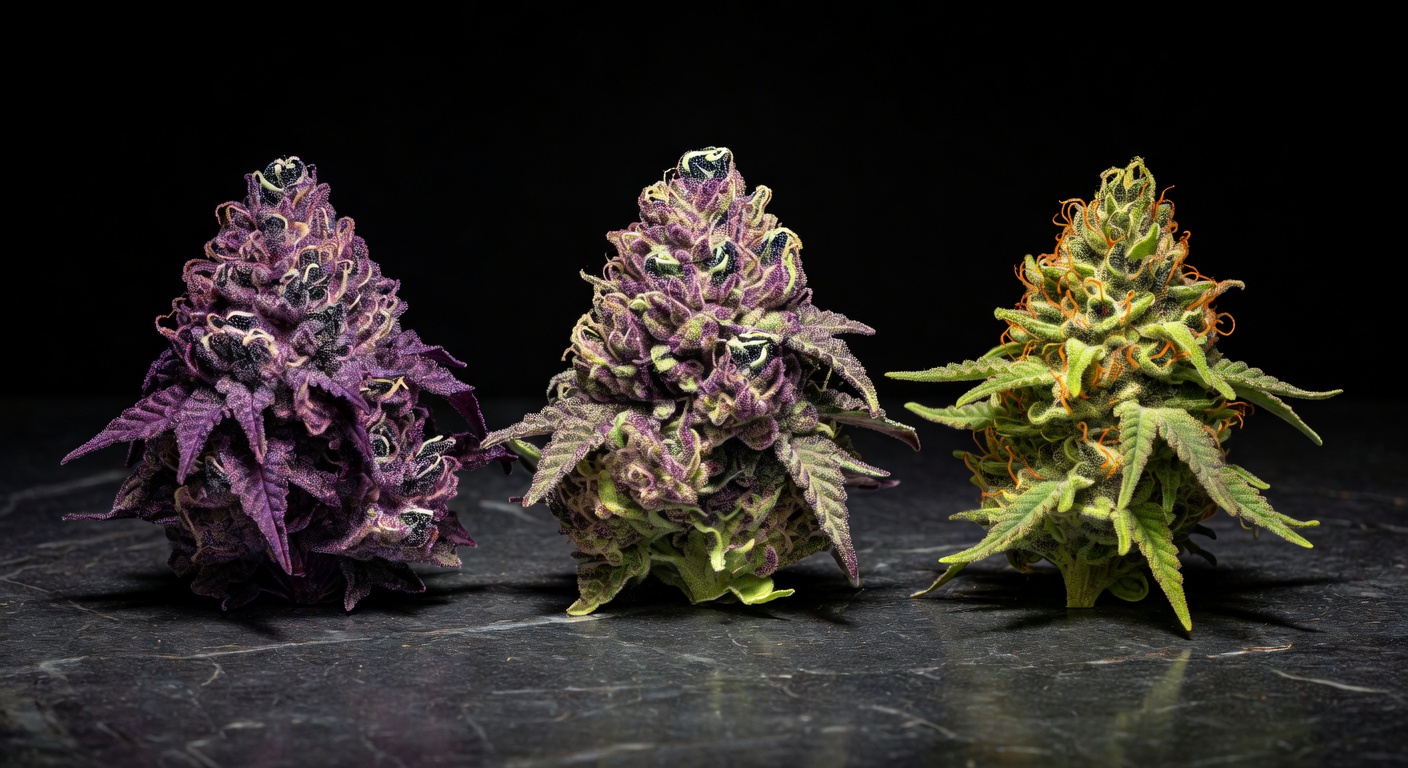
Walk into any dispensary and the menu is divided into three sections: indica, sativa, and hybrid. This three-category system is the foundation of how cannabis is marketed, discussed, and sold worldwide. But how accurate is it, and how should you actually use it to choose your cannabis? The answer is more nuanced than most budtenders will tell you.
The Traditional Framework
Indica
Traditional claim: Sedating, body-focused, good for nighttime use Plant characteristics: Short, bushy plants with wide leaves; originated in the Hindu Kush mountain region of Central Asia; adapted to harsh climates with shorter growing seasons
The word "indica" comes from "Indian" — these plants were historically grown in the Indian subcontinent and surrounding regions. Traditional indica strains include Afghan Kush, Hindu Kush, and Northern Lights.
Sativa
Traditional claim: Energizing, cerebral, good for daytime use Plant characteristics: Tall, thin plants with narrow leaves; originated near the equator (Central America, Southeast Asia, Africa); evolved for long growing seasons with abundant sunlight
Sativa plants can grow over 12 feet tall outdoors and take 10-16 weeks to flower — significantly longer than indicas. Classic sativas include Durban Poison, Lamb's Bread, and Colombian Gold.
Hybrid
Traditional claim: Balanced effects combining indica and sativa characteristics Plant characteristics: Variable, depending on parent genetics
Hybrids are crosses between indica and sativa varieties, bred to combine desirable traits from each parent. They are further categorized as "indica-dominant," "sativa-dominant," or "balanced" depending on which parent's effects are more prominent.
Where the System Works
The indica/sativa/hybrid framework is not entirely without merit. It serves several useful functions:
Quick communication. When you tell a budtender "I want something indica-leaning for sleep," they immediately understand your goal. The labels function as shorthand for effect categories, even if the botanical basis is questionable.
General effect prediction. Strains labeled "indica" do tend to produce more sedating effects, and strains labeled "sativa" tend to be more energizing. This correlation exists because breeders intentionally select for these effects when labeling their creations. It is a self-fulfilling classification — breeders label their sedating strains "indica" because that is what the market expects, and they breed for sedating effects in their "indica" lines.
Cultural familiarity. The system has been in use for decades. Nearly every cannabis consumer understands the basic framework, making it a lingua franca for the industry.
Where the System Fails
Genetic Reality
A 2015 study published in PLOS ONE analyzed the genetic makeup of 81 cannabis strains and found that strain labels did not reliably correspond to distinct genetic lineages. Many "indicas" were genetically closer to certain "sativas" than to other "indicas." Decades of cross-breeding have blurred the genetic lines to the point where pure indica and sativa genetics are essentially extinct in the commercial market.
The Terpene Gap
The indica/sativa system ignores terpenes — the compounds that most directly influence your subjective experience. A "sativa" strain with 1.5% Myrcene will likely feel sedating despite its label. An "indica" with dominant Terpinolene will probably feel energizing. The label tells you the breeder's intention; the terpene profile tells you the chemical reality.
Individual Variation
The same strain can produce different effects in different people based on their endocannabinoid system, tolerance, mood, environment, and even what they ate that day. The rigid indica/sativa binary does not account for this variability.
A Better Approach: Effect-Based Selection
Rather than relying solely on indica/sativa labels, consider a more nuanced approach:
Step 1: Define Your Goal
Be specific about what you want. "Relaxation" and "sleep" are different goals. "Focus" and "creativity" are different goals. The more precise you are, the better your selection will be.
Step 2: Match to Terpene Profiles
Once you know your goal, map it to terpenes:
- **Sleep:** Myrcene + Linalool dominant
- **Pain relief:** Caryophyllene + Myrcene dominant
- **Energy and focus:** Pinene + Limonene dominant
- **Creativity:** Terpinolene + Limonene dominant
- **Anxiety relief:** Linalool + Caryophyllene + moderate CBD
- **Social/fun:** Limonene + Caryophyllene dominant
Step 3: Use Indica/Sativa as a Secondary Filter
After identifying your target terpene profile, use the indica/sativa label as a rough secondary filter. If you want a Myrcene-dominant strain for sleep, looking in the indica section is a reasonable starting point — just do not treat it as the sole criterion.
Step 4: Check the Lab Data
The Certificate of Analysis (COA) is your most reliable guide. It tells you exactly what is in the product: cannabinoid levels, terpene percentages, and contaminant screening. A COA-informed decision will outperform a label-based decision every time.
Choosing by Situation
For Sleep **Start with:** Indica-labeled strains **Verify:** High Myrcene (>0.5%), presence of Linalool **Avoid:** Terpinolene-dominant profiles regardless of label **StrainCompass pick:** Check our [best strains for sleep](/best/sleep)
For Daytime Productivity **Start with:** Sativa-labeled strains **Verify:** Pinene and/or Limonene dominant, moderate THC (15-22%) **Avoid:** High Myrcene, very high THC **StrainCompass pick:** Check our [best strains for focus](/best/focus)
For Social Situations **Start with:** Sativa or balanced hybrid **Verify:** Limonene dominant, moderate THC **Avoid:** Strains known for heavy sedation or introspection **StrainCompass pick:** Check our [best strains for socializing](/best/social)
For Pain Management **Start with:** Indica or indica-dominant hybrid **Verify:** High Caryophyllene, presence of CBD, adequate THC **Avoid:** Very low cannabinoid content **StrainCompass pick:** Check our [best strains for pain](/best/pain)
For Creative Work **Start with:** Sativa-labeled strains **Verify:** Terpinolene dominant (Jack Herer family) **Avoid:** Heavy Myrcene, very high THC that might impair function **StrainCompass pick:** Check our [best strains for creativity](/best/creativity)
The Future of Cannabis Classification
The industry is gradually moving toward more sophisticated classification systems. Some approaches gaining traction:
- **Chemotype classification:** Grouping strains by their chemical profile (cannabinoid and terpene ratios) rather than botanical lineage
- **Effect-based menus:** Some dispensaries now organize products by desired effect (sleep, energy, relief, creativity) rather than indica/sativa
- **AI-powered matching:** Tools like [StrainCompass TerpScout](/terpscout) use chemical data and user preferences to recommend strains regardless of their indica/sativa designation
The indica/sativa/hybrid system is not going away anytime soon — it is too deeply embedded in cannabis culture. But the smartest consumers treat it as a starting point for exploration, not the final word on what a strain will do. Combine the labels with terpene knowledge, lab data, and personal experience tracking, and you will consistently make better choices.
Explore thousands of strains with full chemical profiles in the [StrainCompass database](/strains) and let data guide your decisions.