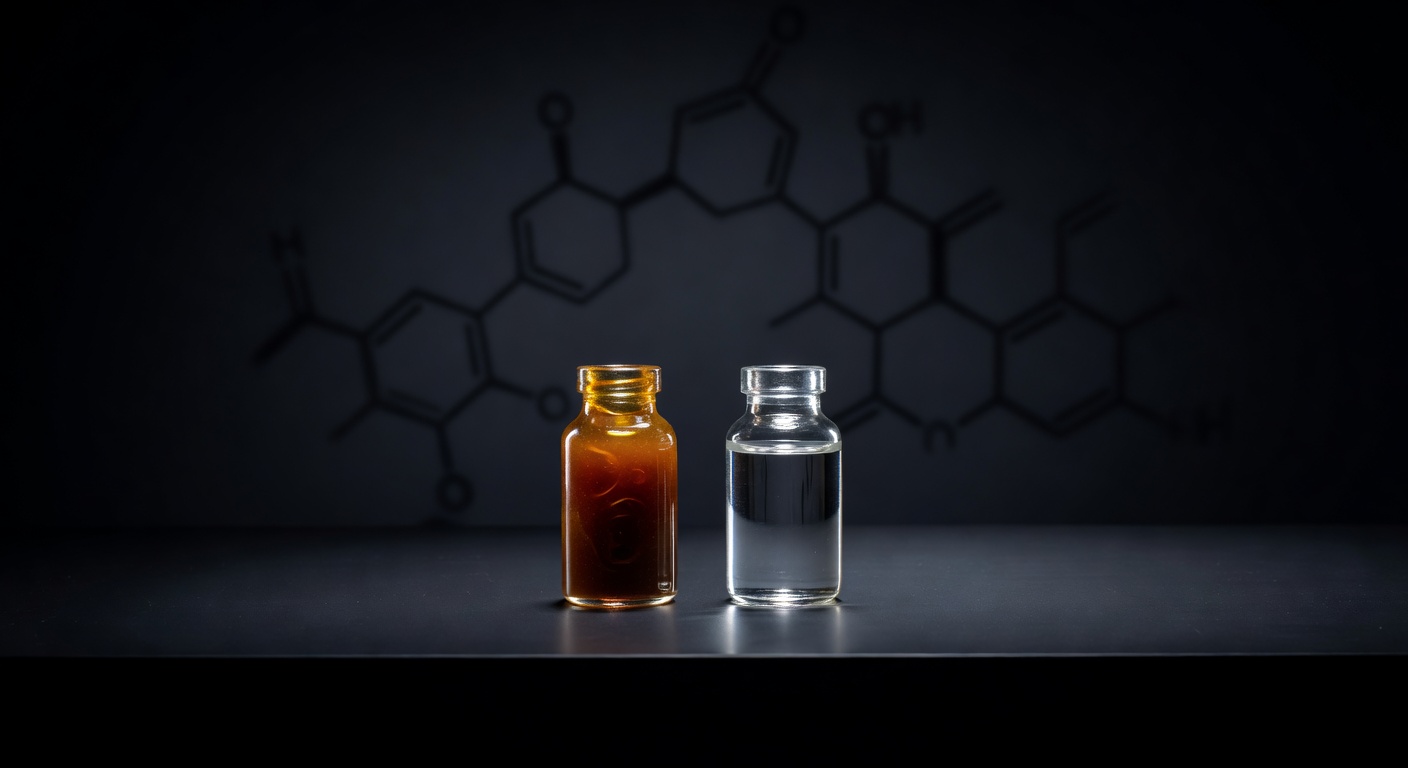
THC and CBD are the two cannabinoids that dominate the conversation around cannabis. They come from the same plant, share the same molecular formula (C21H30O2), and even have similar chemical structures. Yet they produce fundamentally different effects in the human body. Understanding the distinction is essential for anyone who uses — or is considering using — cannabis in any form.
The Basics: What Each Compound Does
THC (Delta-9-Tetrahydrocannabinol)
THC is the primary psychoactive compound in cannabis. It produces the "high" associated with marijuana use by binding directly to CB1 receptors in the brain. These receptors are concentrated in areas responsible for pleasure, memory, coordination, and time perception, which explains the classic THC experience: euphoria, altered sensory perception, increased appetite, and changes in how time feels.
THC was first isolated by Dr. Raphael Mechoulam in 1964 and remains the most studied cannabinoid. Its effects are dose-dependent — low doses tend to reduce anxiety and elevate mood, while high doses can increase anxiety and cause paranoia in sensitive individuals.
CBD (Cannabidiol)
CBD is the second most abundant cannabinoid and is non-psychoactive. It does not produce a "high" in the traditional sense. Instead of binding directly to CB1 receptors like THC, CBD acts as a negative allosteric modulator — it changes the shape of the receptor in a way that reduces THC's ability to bind. This is why CBD can actually counteract some of THC's effects.
CBD also interacts with serotonin receptors (5-HT1A), vanilloid receptors (TRPV1), and GPR55 receptors, giving it a broad range of potential therapeutic applications including anxiety reduction, anti-inflammation, pain modulation, and neuroprotection.
How They Interact: The Entourage Effect
When THC and CBD are consumed together, they produce a different experience than either compound alone. This synergy is part of the entourage effect — the theory that cannabis compounds work better together than in isolation.
Specifically, CBD modulates THC in several important ways:
- **Reduces anxiety:** CBD's negative allosteric modulation of CB1 receptors softens THC's anxiogenic potential
- **Extends duration:** CBD may slow THC metabolism, producing a longer but gentler experience
- **Smooths the curve:** Instead of a sharp peak and crash, THC+CBD combinations tend to produce a more gradual onset and offset
This is why many experienced consumers prefer strains or products with balanced THC:CBD ratios rather than pure THC.
Legal Status
THC and CBD exist in very different legal frameworks:
- **THC** remains federally illegal in the United States (Schedule I) though legal for adult use in 24 states and medical use in 38 states as of 2026
- **CBD** derived from hemp (less than 0.3% THC) was federally legalized by the 2018 Farm Bill
In Canada, both compounds are legal for adult use nationwide. In Europe, CBD regulations vary by country, but products with less than 0.2-0.3% THC are generally permitted.
Medical Applications Compared
THC is Primarily Used For: - **Pain relief** — particularly neuropathic and cancer-related pain - **Nausea and vomiting** — FDA-approved as Marinol (dronabinol) for chemotherapy-induced nausea - **Appetite stimulation** — approved for AIDS-related wasting syndrome - **Muscle spasticity** — used in Sativex (THC:CBD spray) for MS patients - **Insomnia** — particularly strains high in Myrcene
CBD is Primarily Used For: - **Epilepsy** — FDA-approved as Epidiolex for severe seizure disorders - **Anxiety** — clinical evidence for generalized and social anxiety - **Inflammation** — preclinical evidence for arthritis and inflammatory conditions - **Chronic pain** — moderate evidence for neuropathic pain - **Sleep** — particularly when insomnia is anxiety-related
Together (Balanced Ratios): - **Chronic pain** — many patients report better results from balanced products - **PTSD** — emerging evidence for THC:CBD combinations - **Cancer symptoms** — pain, nausea, appetite, and mood support
Common THC:CBD Ratios and Their Effects
High THC (20:1 or higher): Strong psychoactive effects. Best for experienced users or those specifically seeking euphoria, heavy relaxation, or appetite stimulation.
THC-dominant (5:1 to 10:1): Noticeable high with mild CBD modulation. Slightly smoother than pure THC with reduced anxiety risk.
Balanced (1:1 to 2:1): Mild psychoactive effects with strong therapeutic benefit. The sweet spot for many medical patients and new consumers.
CBD-dominant (1:5 to 1:20): Minimal to no psychoactive effect. Primarily therapeutic. Good for daytime use when you need to remain fully functional.
High CBD (CBD only): No psychoactive effect. Pure therapeutic use for anxiety, inflammation, or seizure management.
Side Effects Compared
THC Side Effects: - Anxiety or paranoia (especially at high doses) - Short-term memory impairment - Dry mouth and red eyes - Increased heart rate - Impaired coordination - Potential for psychological dependence with chronic heavy use
CBD Side Effects: - Generally well-tolerated even at high doses - Possible drowsiness at high doses - Mild gastrointestinal upset in some people - Drug interactions (inhibits CYP450 liver enzymes) - Dry mouth (less common than with THC)
How to Choose
Your choice between THC, CBD, or a combination depends on your goals:
- **Want to get high?** THC is the compound you are looking for
- **Want therapeutic benefits without any high?** CBD-only products
- **Want the best of both worlds?** Balanced THC:CBD products
- **Managing a specific medical condition?** Consult the research and ideally a cannabis-literate physician
Use [StrainCompass's strain database](/strains) to filter by THC and CBD content. Our [TerpScout](/terpscout) feature can help you find strains with specific cannabinoid ratios matched to your desired effects. If you are looking for the [best high-CBD strains](/best/cbd), we maintain a curated list updated with the latest lab data.
The THC vs CBD question is not really an either-or proposition. Understanding how both compounds work — individually and together — gives you the knowledge to tailor your cannabis experience to exactly what you need.