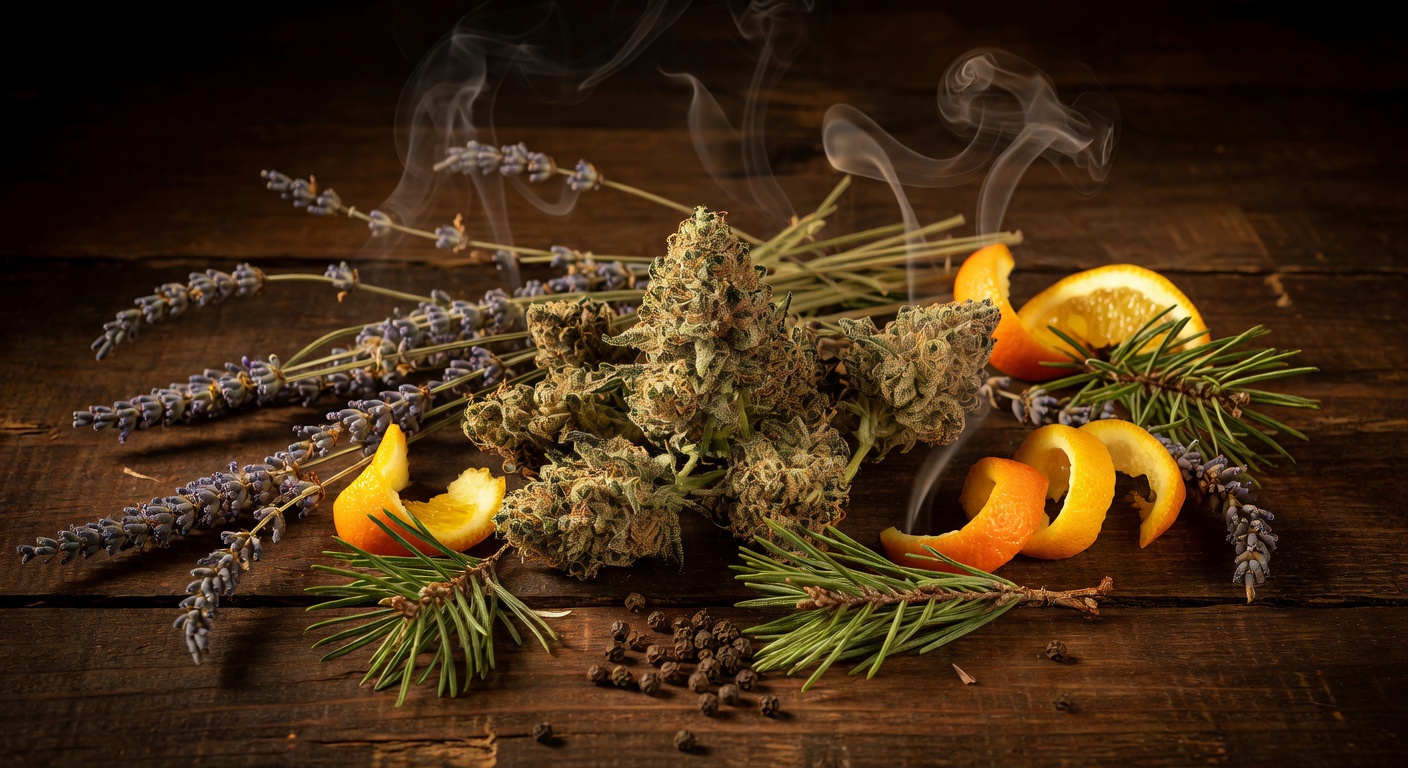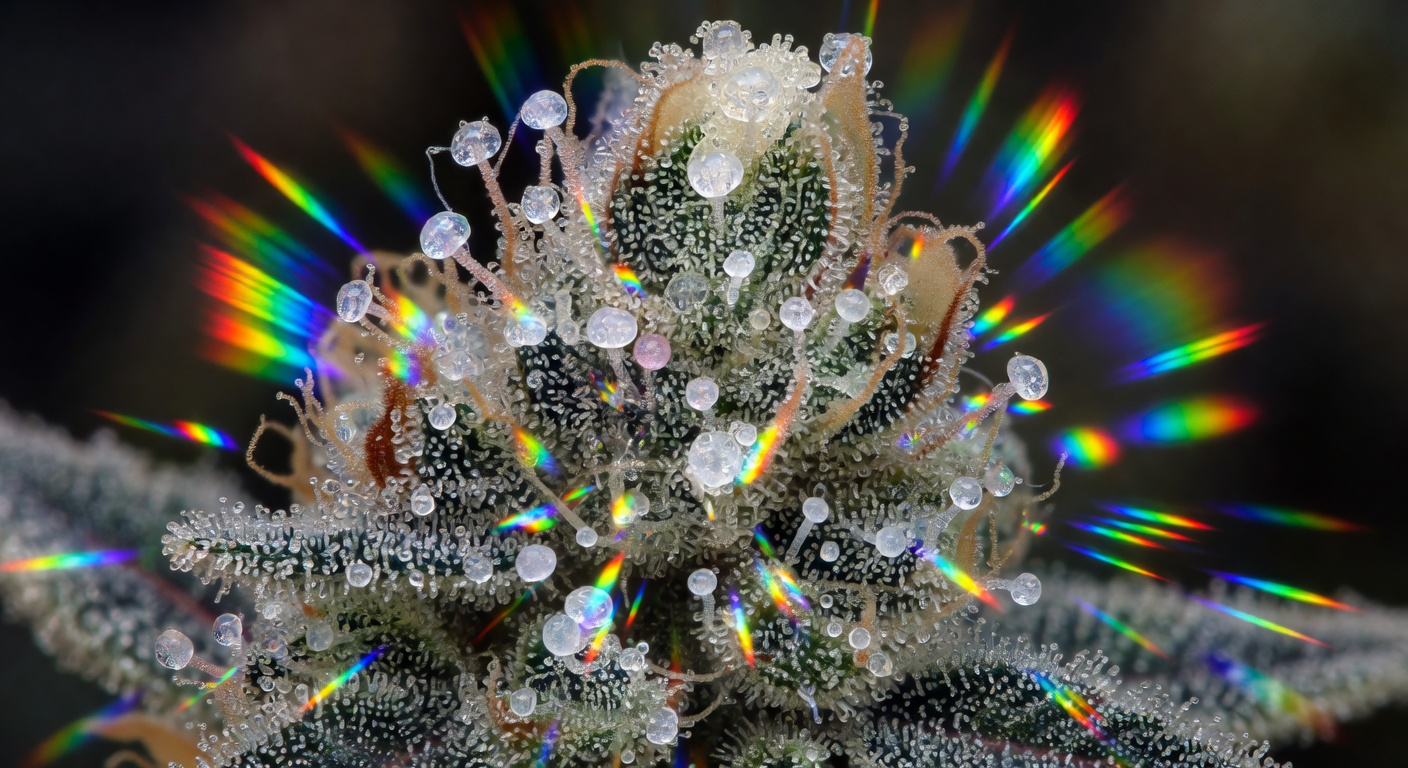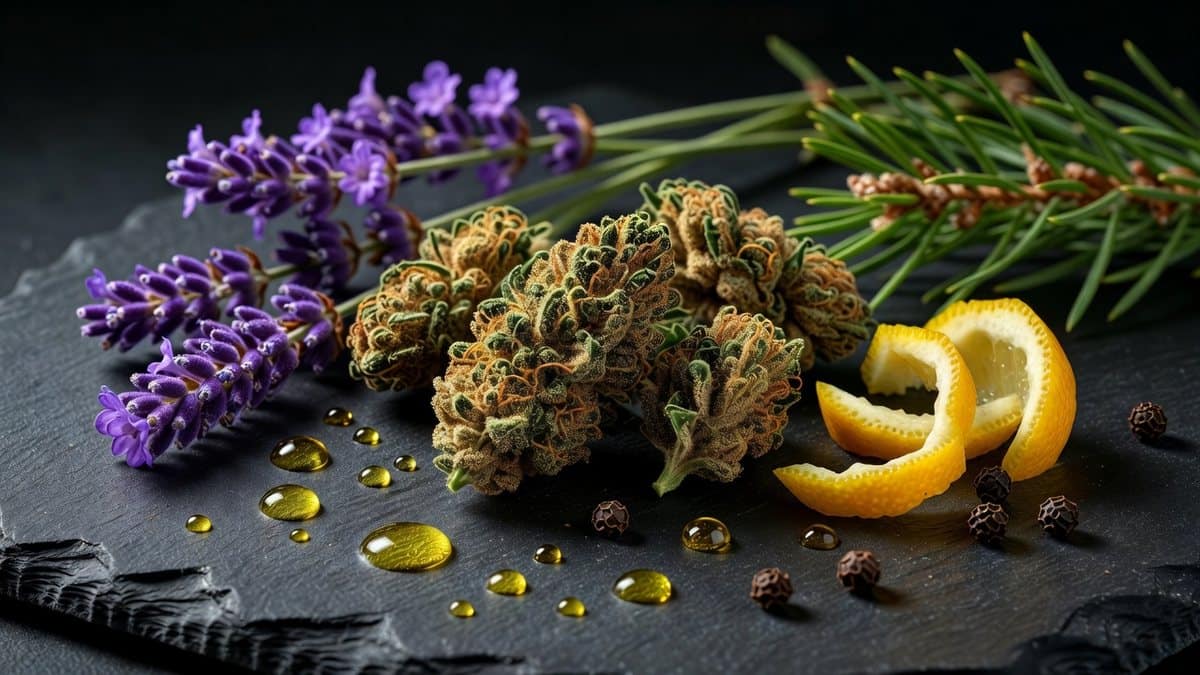
Two cannabis products can contain the same amount of THC and still smell and taste different. Terpenes help explain those sensory differences. What they do not currently establish is a reliable way to predict a person's mental or physical response.
What Terpenes Do Establish
Terpenes are aromatic compounds found in cannabis and many other plants. Myrcene can contribute herbal or earthy notes, limonene citrus notes, pinene pine notes, linalool floral notes, and caryophyllene pepper-like notes.
A lab-reported terpene measurement describes a tested sample. A catalog's dominant-terpene list may instead summarize breeder descriptions or historical samples. These are different kinds of information, and neither is a guaranteed effect profile.
Common Terpenes Without the Marketing Claims
- Myrcene: often associated with herbal, musky, or earthy aromas.
- Limonene: associated with citrus aromas.
- Beta-caryophyllene: associated with pepper and spice and studied as a CB2 receptor agonist.
- Linalool: associated with floral and lavender aromas.
- Alpha-pinene: associated with pine and resinous aromas.
- Humulene: associated with hops and woody aromas.
- Terpinolene: associated with fresh, floral, and citrus aromas.
- Ocimene: associated with sweet and herbal aromas.
These are aroma descriptors, not prescriptions for sleep, focus, anxiety, pain, or energy.
What the Entourage Research Shows
Researchers are studying whether cannabinoids and terpenes interact in meaningful ways. Cell and animal experiments can identify mechanisms and generate hypotheses, but results do not automatically translate to inhaled or ingested products used by people.
A 2024 systematic review found exploratory evidence involving individual terpenes, but concluded that synergistic or additive enhancement of cannabinoid efficacy by terpenes remains unproven. The authors called for further clinical trials. Read The Entourage Effect in Cannabis Medicinal Products.
Earlier commentary similarly describes the entourage effect as a hypothesis rather than a settled clinical principle. See Decoding the Postulated Entourage Effect of Medicinal Cannabis.
How to Shop Without Overreading Terpenes
Use a current product certificate of analysis to compare measured cannabinoid and terpene content when it is available. Check the testing date and laboratory rather than relying on a strain-wide average.
Aroma preferences are a legitimate reason to choose between products. If you are sensitive to THC, consider potency and your own tolerance rather than assuming a terpene will make a high-THC product mild or safe. For medical use, discuss potential benefits, risks, and drug interactions with a qualified healthcare professional.
StrainCompass terpene filters can help explore catalog attributes and aroma reports. They do not predict an individual response, guarantee repeatable effects, or identify treatments.
References
Where to Buy Cannabis Seeds & Products
Independent partner links. StrainCompass is an educational directory and does not sell or ship physical goods. We may earn an affiliate commission from qualifying third-party purchases.
Are you a cultivar breeder or genetics company?
Do you breed Myrcene? Discuss your catalog and profile with StrainCompass. Verification requires an ownership review.